Okay, so check this out—browser-extension wallets used to feel a bit sketchy to me. Whoa! I mean, the first time I clicked “connect” and signed a transaction with a hot wallet I got that same pit-in-my-stomach feeling you get before a steep roller coaster. Really? Yes. At the same time, my workflow changed: I was building, testing, swapping, bridging — all in quick bursts — and a mobile wallet just slowed me down. My instinct said: there has to be a middle ground. Initially I thought desktop wallets were inherently riskier, but then I realized that good design and strict compartmentalization can make extensions both powerful and practical.
Here’s the thing. Browser-extension wallets like rabby are built for that middle ground — fast interactions, multi-chain convenience, and UX tuned for DeFi. Hmm… I know that sounds like marketing-speak, but hang on. I’ve used extensions to manage assets across Ethereum, Polygon, BSC, and a few EVM chains, and the difference in day-to-day friction is real. Small trades, batch ops, approvals — these are all smoother in a well-made extension. And yes, some parts still bug me.
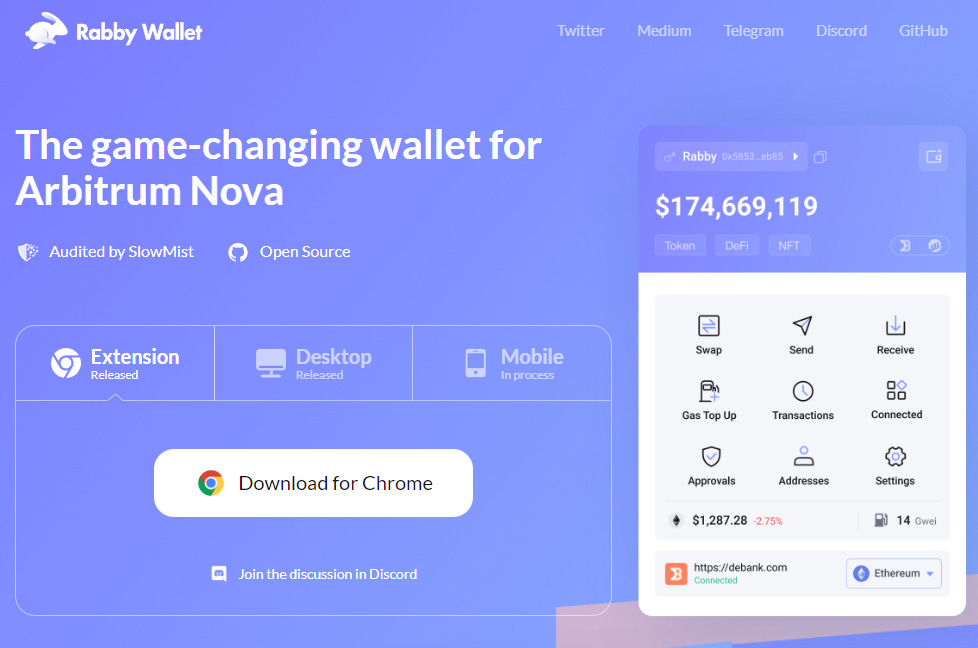
Why people pick extension wallets (and why it makes sense)
Quick answer: speed and context. Short. When you are trading on a DEX, filling a form on a DeFi site, or using an NFT marketplace, the browser context matters. You want your wallet right there. No app switching. No QR hassles. Seriously? Absolutely. On the other hand, that convenience raises obvious security questions, so you should care about the trade-offs.
My gut reaction was always skeptical. Hmm… browser code is complex, and extensions add attack surface. But, actually, wait—let me rephrase that: threat surface grows only if the extension or the browser permissions are misused. A carefully engineered wallet isolates private keys, limits RPC exposure, and prompts for explicit approvals. On one hand people say desktop wallets are safer; on the other hand, a good extension with hardware wallet integration can be both safe and faster. There’s nuance here.
Here’s a practical lens: I run multiple accounts — some for experimentation, some for long-term holdings. I want my day-to-day funds accessible for swaps or liquidity provisioning without exposing my entire stash. Extensions make this easy via multiple account management and account-level compartmentalization. I like that. I’m biased, but convenience that doesn’t trade away control is a big win.
Core features I now look for in an Ethereum/multi-chain extension wallet
Short list first: seed security, transaction clarity, chain management, approval controls, and hardware support. Short. Medium: seed security means deterministic keys stored encrypted locally with a strong passphrase and optional OS-level protections. Long: transaction clarity isn’t just showing “Approve 0.5 ETH”; it’s showing token details, contract addresses, exact spender addresses, estimated gas in fiat, path analysis for swaps, and a clear expiration or nonce explanation so you don’t accidentally sign a replayable or open-ended approval that could drain funds days later.
Multi-chain is not just “I can switch networks.” It’s about sane defaults for RPC endpoints (not some random public node you shouldn’t trust), auto-detection of chain IDs, and preventing accidental sends to incompatible addresses. For example, sending ERC-20 tokens to a Solana address is bonkers but people do wild stuff. (oh, and by the way…) Approval controls are huge. Give me per-contract allowances and a clear revoke flow. And show me historical approvals with the ability to batch revoke. Very very important.
Hardware wallet support is a must for me. Short. If your extension can’t use a Ledger or similar, it’s a non-starter for holding any meaningful value. Integrations these days are smoother — WebHID, Bluetooth, or WebUSB — but the UX still sometimes feels like duct tape. My expectation: seamless signing through the extension UI with zero private key leakage. If that happens, I’ll sleep easier.
Where extensions go wrong — and some red flags
One major red flag is overly permissive permissions at install. A wallet asking broad access to all browser tabs or to read system clipboard by default? Yikes. Another is opaque transaction descriptions. Short. I’ve seen pop-ups reading “Confirm transaction” with no details, and that scares me more than any cold wallet misconfiguration. Something felt off about those trust-everything prompts.
Also watch for bundled “features” that phone home or collect telemetry without clear opt-in. On one hand telemetry helps improve UX, though actually user privacy should be opt-in, not a default. On the other hand, some services justify it as product improvement. I’m not 100% sure about intentionally collecting metadata in a DeFi context — it smells like future liability.
Finally, sloppy multi-chain handling. If the extension automatically switches RPCs without asking, or if it lets you add RPCs from unverified sources, that’s risky. Bad RPCs can inject malicious data, show deceptive balances, or downgrade security. Always check what endpoints are configured, and prefer known providers or self-hosted nodes when possible.
Practical tips I actually use — real workflow stuff
Keep three buckets: small hot wallet for daily DeFi interactions; medium wallet for active trading and bridging; cold storage for long-term holdings. Short. Use the extension for the hot and medium buckets. Use hardware signing for the medium. Use cold storage or multisig for the long-term stash. This approach reduces risk while keeping your workflow nimble.
When connecting to a DApp, I open the extension UI and confirm exactly what it’s asking. Medium. I read contract addresses, and when in doubt I cross-check on a block explorer or the project’s docs. Long: sometimes projects spin up test or scam contracts that look identical to real ones; verify the contract on Etherscan, look for community signals, or check trusted aggregators before approving any large allowances.
Revoke allowances monthly. Seriously. Use the built-in allowance manager or third-party revocation tools via the extension. If you don’t revoke, a single compromised DApp can siphon tokens via unlimited approvals. It’s an avoidable failure mode — and it’s very common.
A quick note on bridging and gas — where UX and security collide
Bridges are the worst part of this ecosystem. Wow! They add complexity: bonded assets, wrapped tokens, and sometimes opaque custody. Short. If you bridge, prefer well-known bridges, and keep an extra small buffer for on-chain gas to recover funds if something goes sideways. Long: bridging often involves interacting with contracts across chains; ensure your extension shows each transaction clearly and never automates cross-chain approvals without user consent. My instinct says keep bridged amounts modest until the bridge has proven stability for months, not days.
Gas UI: show me fiat estimates and priority levels. Medium. Don’t hide “max fee” behind a settings submenu. Also don’t allow unlimited slippage by default; prompt users when slippage is more than a few percent. These small UX choices prevent dumb mistakes.
Why I sometimes recommend using an extension and when I don’t
I recommend an extension when you need speed for recurring interactions, when you manage multiple short-to-mid-term accounts, or when you want smoother DeFi composability. Short. I don’t recommend an extension if you store life-changing amounts without hardware protection, or if you’re unfamiliar with reading transaction data. If someone says “trust me, it’s fine,” that’s not a reason. Be skeptical. Be methodical.
On a personal note: I’m biased toward software that respects user control. I prefer predictable behaviour over flashy gimmicks. That preference colors a lot of my recommendations. I’m not perfect. Sometimes I overvalue UX. Sometimes I underplay edge-case attacks. But thinking through these trade-offs out loud helped me build a setup that balances convenience with security.
FAQ
Is a browser-extension wallet safe for Ethereum?
Short answer: it can be. Safety depends on the wallet’s architecture, permissions, and your personal practices. Use hardware integration for significant funds, review transaction details before signing, and restrict allowances. Also update your browser and extension regularly to reduce exploit risk.
How do I manage multiple chains without confusion?
Keep naming conventions and notes. Use separate accounts for distinct purposes. Verify RPC endpoints and prefer known providers. Some extensions allow network tagging and custom chain icons — use them. And always double-check recipient addresses when switching networks; that’s where mistakes happen.
Should I trust new browser-wallet projects?
Trust but verify. Look for third-party audits, open-source code, and transparent teams. Community reviews and adoption matter. If you can’t verify a claim, assume risk. And remember: no tool is a silver bullet.
Alright — to wrap up without sounding formal or robotic: browser-extension wallets fill a sweet spot for DeFi users who want speed and multi-chain convenience. They’re not magic. They require discipline, an eye for permissions, and sometimes a hardware signer. If you take basic hygiene seriously — small hot wallets, monthly revokes, hardware for big sums — the extension becomes an asset rather than a liability. That balance is what sold me on using them in my daily workflow. Hmm… maybe you’ll feel the same, or maybe you’ll stick to cold storage. Either way, keep curious, and stay careful.